A molecule’s name describes what it is. It does not, by itself, establish what it does.
A chain with a specific sequence
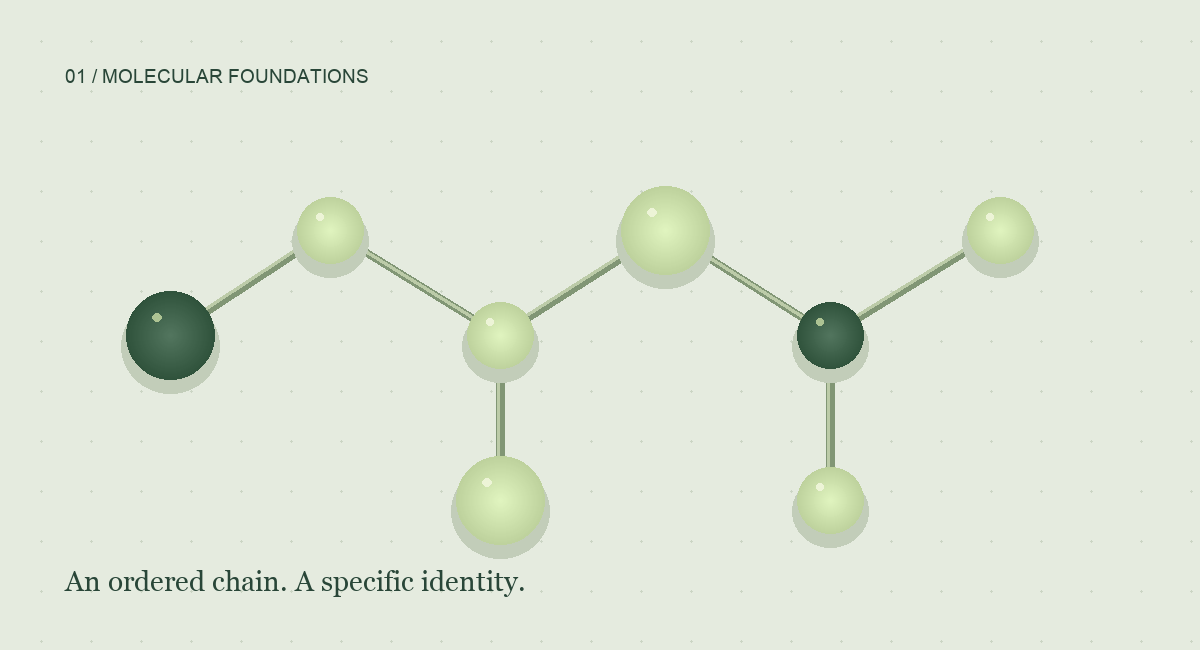
Peptides are molecules made from amino-acid residues connected by peptide bonds. An amino acid incorporated into a chain is called a residue. The order of those residues is the sequence, and changing that order can change a molecule’s properties.
Think of a sequence as an ordered description, not a list of ingredients. Two chains can contain the same types of residues yet arrange them differently. Length is another part of the description, but there is no single universally applied length boundary that separates every peptide from every protein.
A useful first reading question is simple: which exact molecule is the author discussing? A broad phrase such as “peptide research” covers many different molecules and experimental questions.
Four terms worth knowing
- Sequence
- The order of amino-acid residues in the chain.
- Peptide bond
- The chemical linkage that connects adjacent residues in a peptide backbone.
- Modification
- A specified chemical change, such as a change at one end of the chain. It belongs in the material’s description.
- Assay
- A measurement procedure designed to investigate a particular property or response.
When reading a paper, note any sequence, terminal modification or material identifier. A familiar short name alone may not capture all the details needed to compare two experiments.
Structure is not evidence of a benefit
A chemical description and an experimental finding answer different questions. Knowing the sequence does not establish how a material behaves in every setting. Researchers need an appropriate model, a defined measurement and suitable comparisons to investigate a specific question.
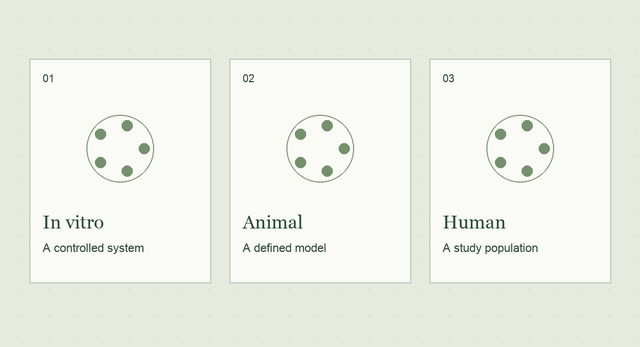
A result reported in isolated cells belongs to that experimental context. It should not become a statement about an outcome in people without relevant evidence. Likewise, a commercial product with a similar name is not automatically equivalent to the material used in a published study.
Replace “What does this peptide do?” with “What was measured, in which model, using which material?”
Common misconceptions
“All peptides are basically the same”
Peptide is a broad chemical description. Sequence, modifications, physical form and experimental conditions all matter. Findings for one molecule cannot simply be transferred to another.
“A research label proves quality”
A research-use-only label describes intended use. It does not independently verify identity, purity, safety or suitability for a particular experiment.
“More technical language means stronger evidence”
Precise terminology helps communication, but it cannot substitute for a well-described method and interpretable results. Look for details you can check.
Your next step
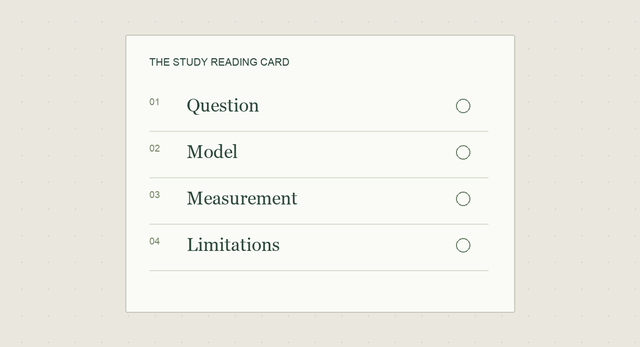
Start a small reading record: exact material, model, question, measurement and limitation. This keeps a definition separate from a claim. Then move on to our guides to study design and laboratory documentation.
This introduction is about scientific vocabulary. It is not a guide to selecting a compound for personal use, and it does not provide administration or dosage instructions.
References & further reading
Background resources for the concepts in this guide. These organisations do not endorse this publication or its affiliated range.